MK4 Swerve Drivebase & Robot Architecture
Mechanical Design · CAD · Packaging · Manufacturing
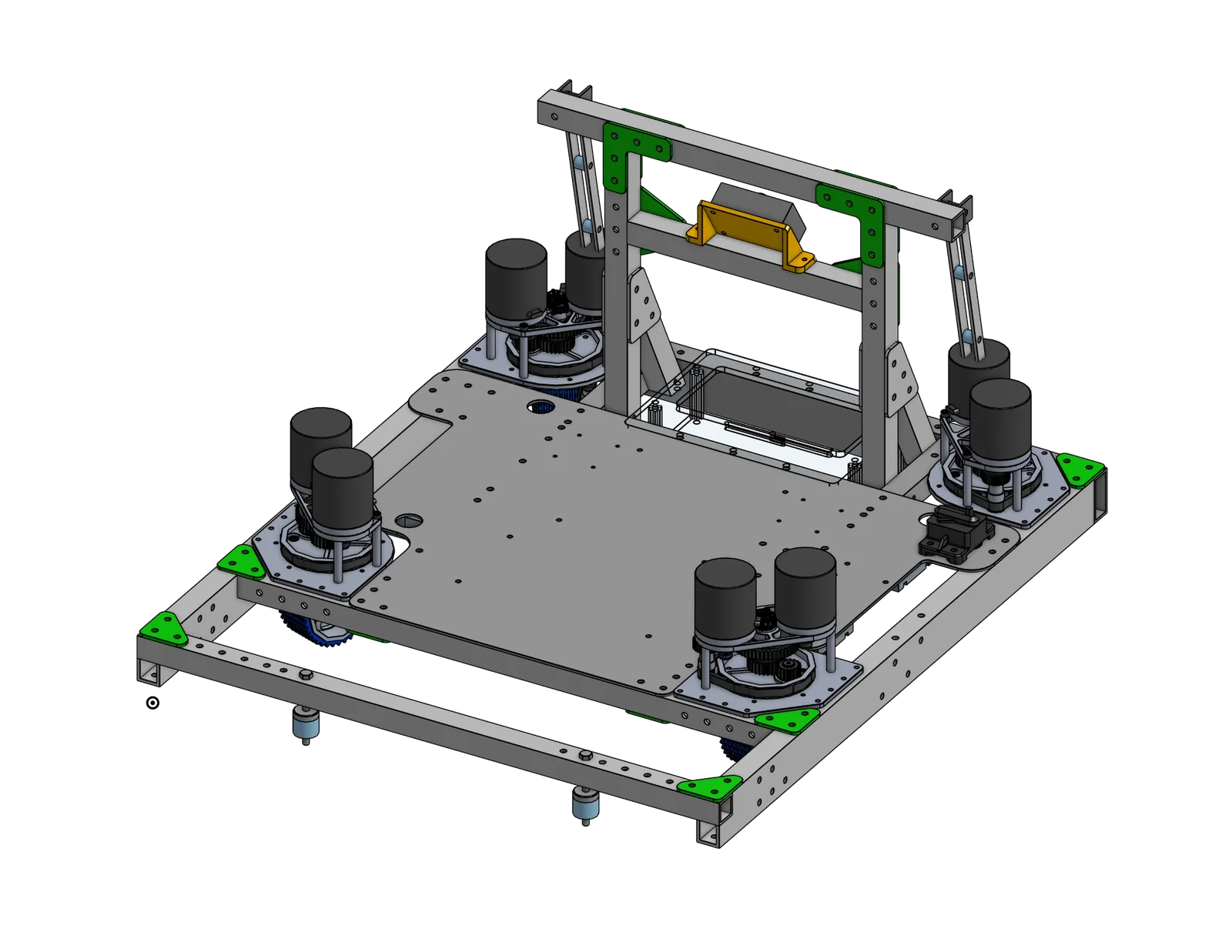
Designing the platform everything else mounts to
I designed the complete mechanical architecture for our 2024 FIRST Robotics Competition robot around an MK4 swerve drivetrain. I was responsible for the chassis design, frame rails, cross members, battery mount, bellypan, bumper mounting system, electronics packaging, and the subsystem interfaces.
The goal was a lightweight, serviceable platform capable of integrating the drivetrain, elevator, intake, and climbing mechanisms within the constraints of the FRC game.
What the chassis had to do
| Requirement | Detail |
|---|---|
| Drivetrain | Integrate four MK4 swerve modules into a rigid, manufacturable chassis |
| Weight | Keep the complete robot under the 125.5 lb FRC weight limit |
| Packaging | Package drivetrain, battery, electronics, intake, elevator, and climber within legal robot dimensions |
| Intake | Reserve space for an under-bumper intake while maximizing volume for the superstructure |
| Serviceability | Be easily serviced between competition matches |
| Schedule | Design, manufacture, assemble, and test within the 3-month build season |
Under-bellypan electronics
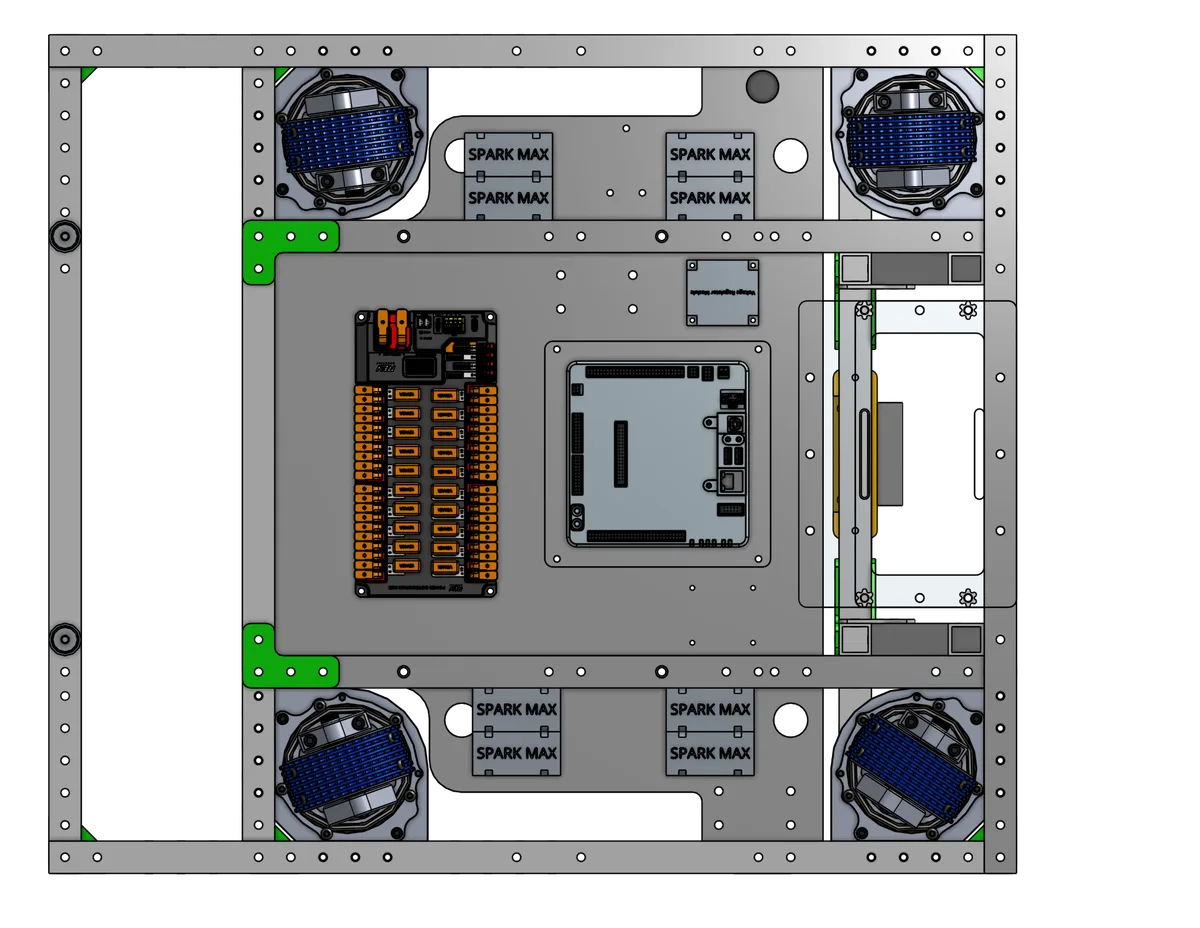
One of the primary design goals was maximizing usable space for robot mechanisms. To do that, I located the roboRIO, motor controllers, power distribution hardware, and wiring beneath the chassis rather than on top of it.
- Freed the upper chassis for the elevator, climber, and other mechanisms
- Created the packaging volume required for the under-bumper intake, preventing interference with the electrical system
- Simplified wire routing — nearly all wiring runs beneath the robot instead of through moving mechanisms
- Improved serviceability: the complete electrical system is accessible by removing only the bellypan, not by disassembling subsystems
- Integrated a dedicated access hole for the roboRIO power button, for quick resets during testing and competition without removing panels
- Lowered the robot’s center of gravity as an additional benefit, improving stability
Every subsystem planned together
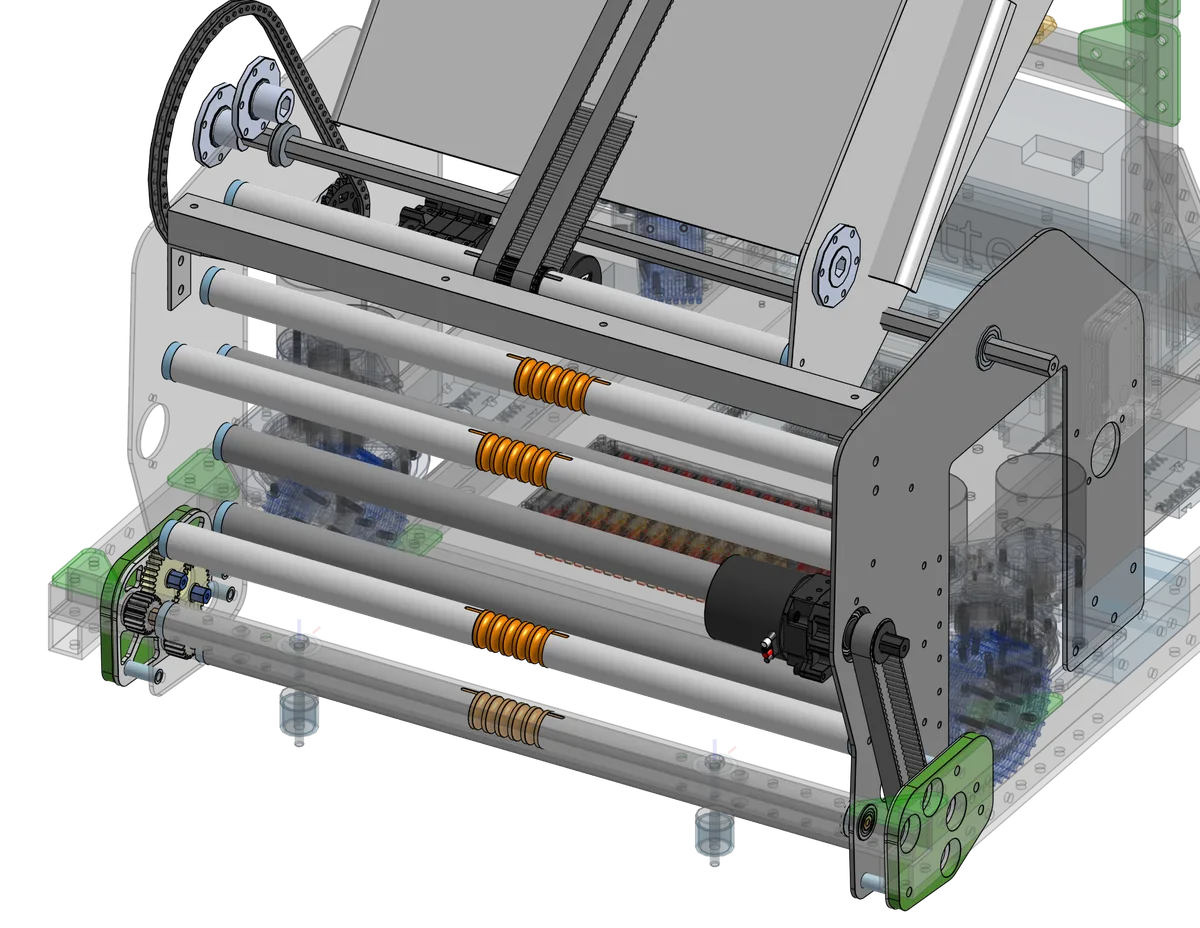
The primary architectural challenge was packaging all major subsystems within the limited chassis volume while complying with FRC size constraints. The robot uses an under-bumper intake, which required significant space beneath the front of the chassis — so the drivetrain, battery, electronics, elevator, and climbing mechanism were all planned together during CAD rather than independently.
Component placement was coordinated to reserve sufficient volume for the intake throughout its motion, prevent interference between mechanisms, simplify subsystem integration, maintain access for manufacturing and maintenance, and keep the robot balanced while supporting every mechanism.
From Onshape to a rolling chassis
I generated manufacturing-ready CAD in Onshape and fabricated structural robot components using CNC and manual machining equipment before assembling and integrating the complete competition robot.
The frame was designed to provide a rigid structural foundation while maximizing usable internal volume for mechanisms and simplifying manufacturing and assembly.
Competition performance
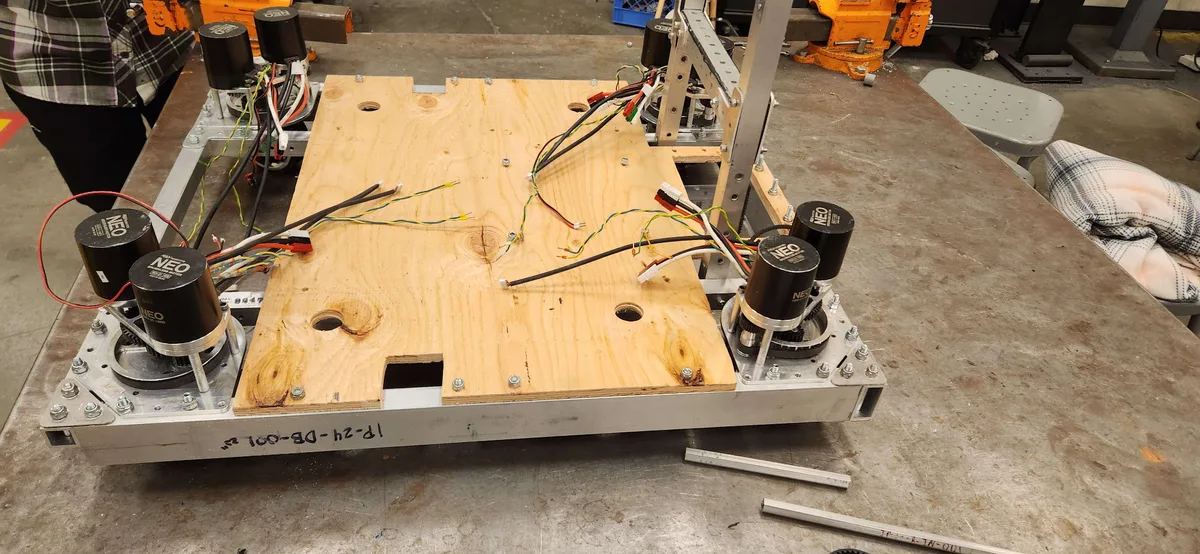
The drivebase and chassis architecture were successfully integrated into the final competition robot and used throughout the 2024 competition season. The chassis provided a reliable mechanical foundation while supporting all major subsystems and maintaining clean electrical routing and straightforward serviceability.
Designing a robot, not a drivetrain
This project taught me that designing a competition robot extends far beyond integrating drivetrain modules. Every subsystem affected the others, requiring constant tradeoffs between packaging, structural rigidity, manufacturability, serviceability, wiring, and weight distribution.
If I redesigned the chassis, I would continue prioritizing serviceability while exploring additional opportunities for weight reduction and modular subsystem mounting to simplify future iterations.