Deployable Multi-Level Climbing Mechanism
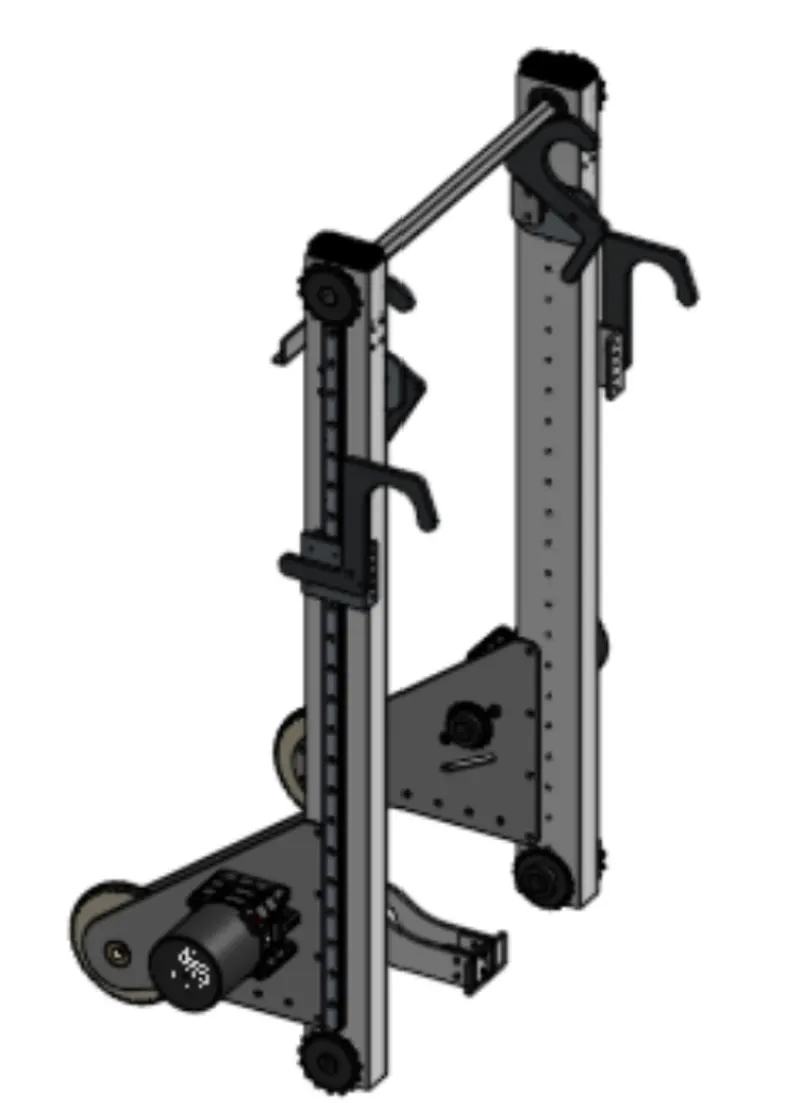
A deployable climber that carries the full weight of the robot up multiple bars on alternating carbon-fiber hooks — packaged into three inches of space between the swerve modules and shooter.
These case studies document requirements, engineering decisions, testing, and iteration across individual and group projects. Numbers and methods come from project documentation, not from memory.
A deployable climber that carries the full weight of the robot up multiple bars on alternating carbon-fiber hooks — packaged into three inches of space between the swerve modules and shooter.
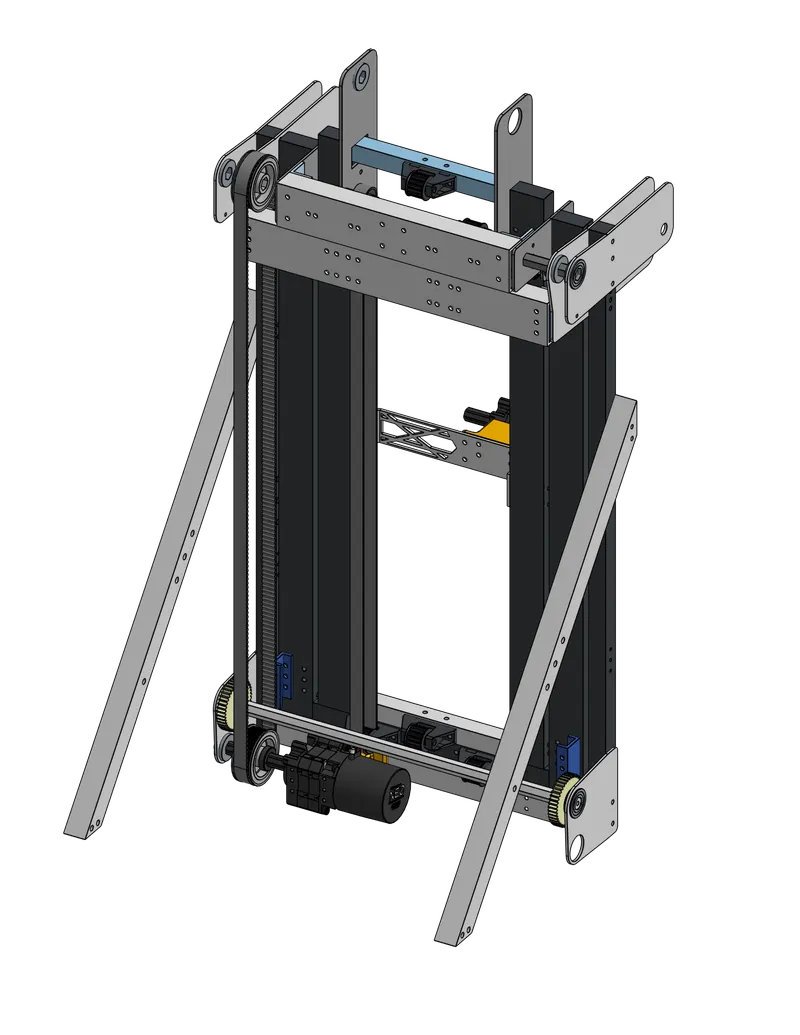
A fully belt-driven three-stage cascading elevator that reaches a 7-ft scoring target from inside a 3 ft 6 in. starting-height envelope — redesigned component-by-component through testing.
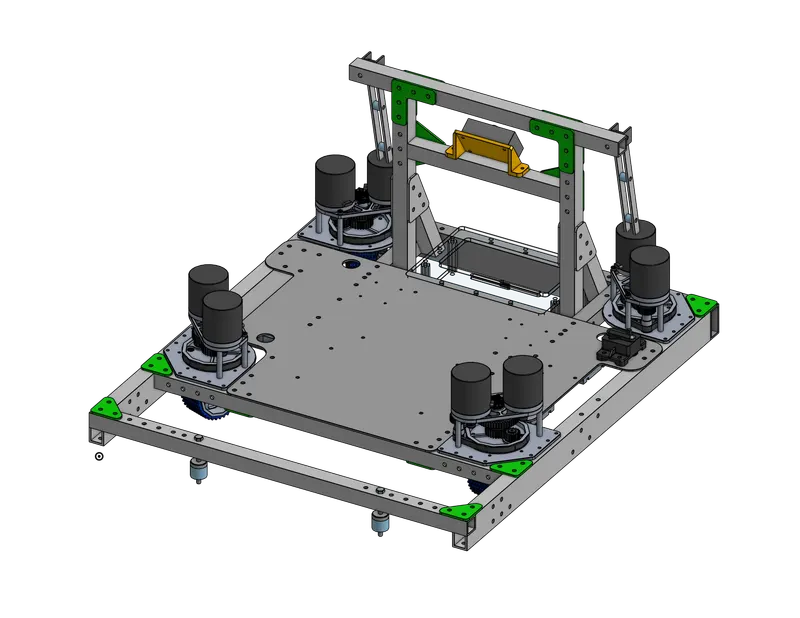
The complete mechanical architecture for a 2024 FRC robot — chassis, frame rails, bellypan, and an under-bellypan electronics layout that freed the upper chassis for the elevator, climber, and under-bumper intake.
A group-built 5-inch FPV drone combining mechanical assembly, electrical integration, configuration, and flight testing. A separate group case study is in progress.
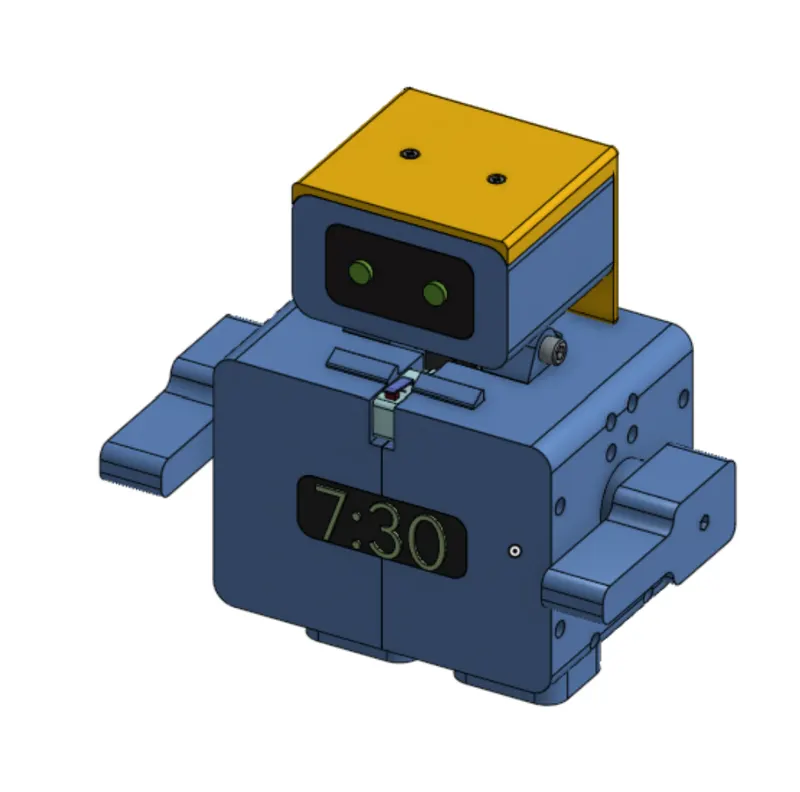
A character-driven mechanical alarm clock whose spring-return head, passive latch, servo linkage, articulated controls, and OLED turn the alarm sequence into a physical interaction.
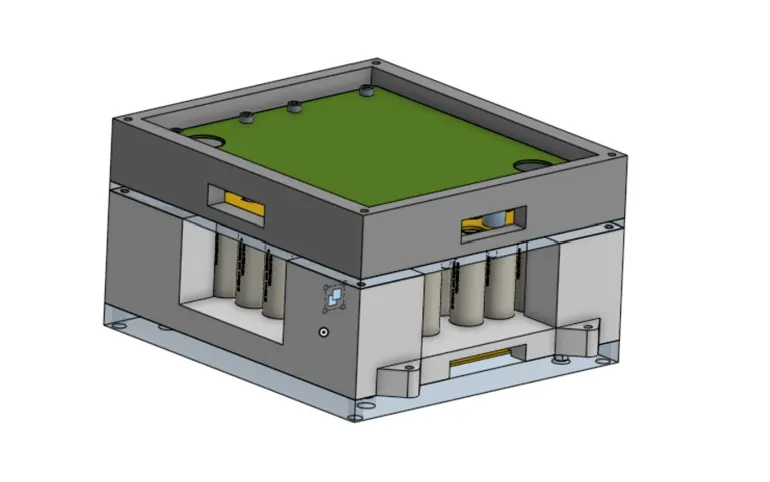
Designed and analyzed a 42-cell 14S3P battery module in SolidWorks, focusing on structural integrity, cell spacing, insulation, battery-system integration, and manufacturability.